Does a DUI Show Up on Your Passport? Canadian Passport Rules Explained
Rate this article
1
votes —
5.0
Updated:
4 hours ago
Views:
6
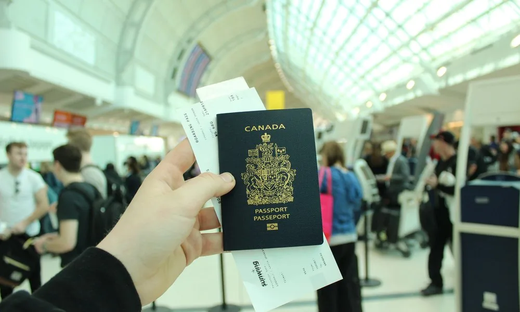
No, a DUI conviction does not appear on the passport document itself.
A Canadian passport shows your name, photo, date of birth, and citizenship; it is not a criminal record and does not list charges or convictions. That said, a DUI can still affect your passport in narrower ways, mainly if you are currently facing an indictable charge, subject to a court condition that restricts travel, or serving a sentence, and it can separately affect whether other countries let you in once you arrive with a valid passport in hand.
A Canadian passport is proof of identity and citizenship; it
does not display a criminal record
, and a DUI conviction is not printed on it or embedded in its chip.
The standard passport application
does not, as a routine step, ask about criminal records
, so most people with a past DUI conviction can apply for or renew a passport normally.
Under the
Canadian Passport Order
, a passport can be
refused, revoked, or withheld
in narrower situations: standing charged with an indictable offence, imprisonment, parole, probation, or a court condition that would prevent you from leaving Canada, or a passport-specific offence under
section 57 of the Criminal Code
.
A completed DUI sentence with no ongoing court conditions restricting travel
generally does not, on its own, block passport issuance
.
Whether a DUI affects entry into another country is a
separate question
from whether you can get a passport, governed by that country's own immigration rules rather than Canadian passport rules.
A
record suspension
(formerly called a pardon) can remove a DUI conviction from most background checks after a waiting period, which may also ease certain travel-related checks, though it does not change what a passport itself displays.
Does a DUI Appear on the Passport Document Itself?
No. A Canadian passport is a travel and identity document. It contains your photo, signature, name, date of birth, sex, place of birth, and an expiry date, along with a machine-readable zone and an embedded chip that stores your name, sex, date of birth, photo, passport number and expiry date. None of this is, or is derived from, a criminal record. The passport application itself does not ask whether you have a criminal record. Immigration, Refugees and Citizenship Canada (IRCC), which issues passports, does not screen for past convictions as such, but the Passport Program has used a read-only police-information query tool to check the eligibility grounds in the Canadian Passport Order, such as pending indictable charges, warrants, and imprisonment, parole or probation.
Can a DUI Charge or Conviction Affect Getting or Renewing a Passport?
In most cases, no, but there are specific, narrower exceptions set out in the Canadian Passport Order (a federal regulation, SI/81-86). Under sections 9, 10, 10.2, and 10.3 of that order, the Minister can refuse to issue, revoke, or refuse passport services in situations that include:
Standing charged in Canada with an indictable offence, or charged abroad with an offence that would be indictable if committed in Canada;
Being imprisoned, or subject to parole, probation, or statutory release conditions imposed by a court that would prevent you from leaving Canada;
Having been convicted of a passport-specific offence under section 57 of the Criminal Code (such as forging or fraudulently using a passport); or
Using a passport to help commit an indictable offence, which can lead to revocation after the fact.
For most people with a completed first-offence DUI, none of these apply once the sentence, including any driving prohibition, fines, and probation, has been fully served. A DUI charge that is still before the courts is a different situation. The Order lets the Minister refuse a passport to someone who stands charged with an indictable offence, and because impaired driving is a hybrid offence, whether a pending DUI charge is treated that way is worth confirming with counsel or the Passport Program rather than assuming either way. A release condition or probation order that specifically restricts your ability to leave the country is a separate ground. The practical takeaway is that a completed sentence with no conditions is very different from an open charge, and the charge status or a specific court condition matters more than the DUI label itself.
What About Travelling to Other Countries With a DUI?
This is a genuinely separate question from whether Canada will issue you a passport, and it depends entirely on the immigration rules of the country you're entering, not on Canadian passport rules. A valid Canadian passport gets you to the border; what happens next is up to that country's border officials. A DUI can
restrict you from crossing the border
, and
travelling to Mexico with a criminal record
raises its own questions, so check the rules for your destination before you book.
Record Suspensions (Pardons) and Passport Applications
A record suspension, administered by the
Parole Board of Canada
under the
Criminal Records Act
, keeps a conviction separate from other criminal records, which generally means it no longer appears in most background checks tied to employment, volunteering, or, in some cases, travel screening. For offences committed on or after March 13, 2012, the waiting period is 10 years for an indictable conviction and five years for a summary conviction, running from the date you finish your entire sentence, including any fines, probation, and driving prohibitions. Because impaired driving is a hybrid offence, the applicable waiting period depends on how the Crown proceeded in your case. A record suspension does not change what appears on a passport (since nothing criminal appears on it to begin with), but it can be a relevant step if you're concerned about how a past DUI might surface in other kinds of checks connected to travel, such as certain visa applications.
If You're Concerned About an Upcoming Passport Application
If you have a completed DUI sentence and no outstanding charges or court conditions, you can generally apply for or renew a passport the same way as anyone else, through the standard IRCC process. If you're currently facing a DUI charge, are on probation, parole, or statutory release, or are unsure whether a condition in your release or sentencing order could restrict international travel, it's worth reviewing that condition specifically, either with IRCC directly or with your lawyer, before assuming either way. Conditions are written into your specific court order or release documents, not into the DUI charge itself, so the safest step is to check your own paperwork rather than relying on a general rule.
Conclusion
A DUI conviction does not show up on a Canadian passport, because the passport itself is not a criminal record and the application process does not screen for one. Passport issuance can be affected in narrower circumstances tied to an outstanding indictable charge or a specific court condition restricting travel, not by a completed DUI sentence on its own. Whether another country lets you in with that passport is a separate question governed by that country's own rules. If you have questions about how a specific charge, condition, or sentence might affect your travel plans, a conversation with defence counsel can help clarify where you actually stand.
Secure Experienced Criminal Defence with Mass Tsang
If you have an upcoming trip and an open DUI matter, a probation condition you're unsure about, or a passport application that's been flagged or delayed, speaking with a
DUI defence lawyer
before you make travel plans can help you understand exactly what your specific conditions do and don't allow. Mass Tsang's Toronto-based team can review the details of a pending or past DUI matter and how it may intersect with travel plans.
Contact us
for a free consultation.
FAQ
No. A passport shows your identity and citizenship details, not your criminal record. A DUI conviction is not printed on the document or stored in its chip.
In most cases, yes. If your sentence is complete and there are no outstanding court conditions restricting travel, a past DUI conviction generally does not prevent you from getting or renewing a passport.
It can. The Canadian Passport Order lets the Minister refuse a passport to someone who stands charged with an indictable offence, and a release condition that restricts leaving the country is a separate ground. Because impaired driving is a hybrid offence, ask your lawyer how a pending DUI charge is treated, and review your own release documents if you're unsure.
Only if your specific probation order includes a condition that prevents you from leaving Canada. Not all probation orders include this; check your own order rather than assuming.
This is a separate question from Canadian passport issuance and depends on US immigration rules.
There's nothing to remove from the passport itself, since it never showed the conviction. A record suspension can help with background checks tied to other processes, such as certain visa applications, but it doesn't change the passport document.
For offences on or after March 13, 2012, it's 10 years for an indictable conviction or five years for a summary conviction, starting once your full sentence, including probation and fines, is complete. Impaired driving is a hybrid offence, so which period applies depends on how the Crown proceeded.
Contact IRCC to understand the specific reason for the delay, and consider speaking with a criminal defence lawyer if the delay appears connected to an outstanding charge or a court condition, so you understand your options.