Understanding Standardized Field Sobriety Testing in Canada’s DUI Laws
Rate this article
2
votes —
5.0
Updated:
1 month ago
Views:
937
“Can you walk a straight line?”
“Can you stand up on one leg and hold that pose without faltering?”
“Can you clearly count backwards from 100?”
“How about making a mistake-free recitation of the alphabet?”
Most people can answer “yes” to these questions, but must admit that the answers might become “no” if asked after they have consumed alcohol. Given the challenge of successfully performing such physical and mental coordination tests, North American police officers have used such testing to assess potential motorist impairment since the 1960s.
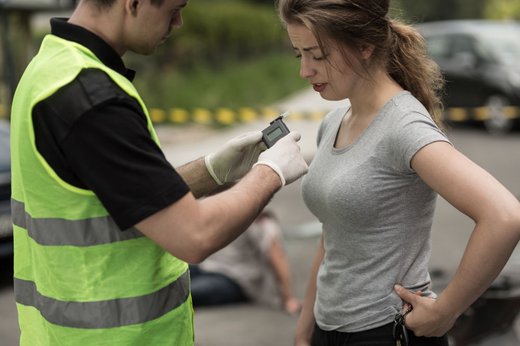
That said, if a Canadian police officer suspects that you’ve been driving while impaired, they’re not going to make you perform some random mental and physical coordination tests. Instead, you may be required to perform three distinct coordination tests prescribed by regulation as Standardized Field Sobriety Tests (SFSTs).
The police can also require drivers to submit to roadside breath screening, provided they have an approved screening device in their possession. Failing to comply with a demand to undergo either form of impairment testing is a criminal offence that carries the same penalties as a DUI.
With decades of criminal defence experience in the Greater Toronto Area,
the impaired driving lawyers of Mass Tsang
know that motorists are often confused about this aspect of DUI law and their rights when it comes to roadside sobriety screening. Let’s examine the laws covering SFSTs, how they work in practice, and answer the most frequently asked questions about the subject.
Note:
This article should be read as general legal information about SFST procedures in Canadian DUI investigations. Anyone facing an impaired driving charge should obtain legal advice based on the specific facts, police notes, test results, and disclosure in their case.
Roadside Impairment Screening at a Glance
Screening Tool
Police Threshold
Purpose
Key Legal Point
Standardized Field Sobriety Testing (SFST)
Reasonable grounds to suspect impairment
Assess physical coordination and signs of impairment
Refusal or failure to complete may be charged as a criminal offence.
Roadside breath screening
Officer has an approved screening device available
Estimate possible blood-alcohol concentration at roadside
Used to support further investigation and arrest rather than as trial evidence.
Key Takeaways
Canadian DUI laws require motorists to submit to roadside field sobriety testing upon demand from police officers who have “reasonable grounds” to believe a driver may be impaired.
The Criminal Code also allows police officers to compel any motorist to submit to roadside breath screening, provided the officer has an approved screening device in their possession.
The penalties for failing to comply with or otherwise complete the SFST or breath screening are the same as those for a standard criminal DUI.
Many Canadians are confused about this aspect of DUI law and how it works in practice.
To answer outstanding questions about Standardized Field Sobriety Testing (SFST), the DUI legal experts of the GTA’s Mass Tsang have put together this tutorial.
“
Standardized field sobriety testing is not simply a roadside exercise. It is a regulated investigative tool, and the legality of the demand and the way the test was administered can both matter in court.”
—
Jeff Mass
, Co-Founder, Mass Tsang LLP
Standardized Field Sobriety Testing According to the Criminal Code
Section 320.27(1) of the Criminal Code authorizes Canadian police to demand that motorists undergo SFST or other screening, provided an officer “has reasonable grounds to suspect that” the targeted motorist is driving while impaired. Section 320.27(1)(a) distinctly covers SFSTs by requiring motorists “to immediately perform the physical coordination tests prescribed by regulation and to accompany the peace officer for that purpose.” The physical coordination tests prescribed by regulation are:
Horizontal gaze nystagmus (HGN) test
— The driver is required to look at an object while the officer moves it from side to side in front of their visual field. The officer observes the driver’s eye movements to assess the level of nystagmus, which is an involuntary jerking of the eyeball that can be caused by intoxication.
Walk-and-turn test
— Drivers are required to take nine heel-toe steps in a straight line and then turn on one foot to repeat the movement in the opposite direction. Evidence of potential impairment is marked by loss of balance, failing to touch heel-to-toe, miscounting steps, incomplete turns, and other missteps.
One-leg stand test
— A driver is required to stand with one leg six inches off the ground and conduct a countdown for about 30 seconds. Failure to keep the foot up, balance issues, swaying, losing count, and other coordination issues may indicate impairment.
The Three Standardized Field Sobriety Tests
SFST
What the Driver Is Asked to Do
What Police Look For
Horizontal gaze nystagmus (HGN)
Follow an object with the eyes as it moves from side to side.
Involuntary eye movement that may be associated with impairment.
Walk-and-turn
Take nine heel-to-toe steps, turn, and repeat in the opposite direction.
Balance issues, missed heel-to-toe steps, wrong step count, improper turn, or other missteps.
One-leg stand
Stand with one leg raised and count for about 30 seconds.
Swaying, putting the foot down, loss of balance, losing count, or other coordination issues.
Typical SFST Investigation Flow
Officer suspects alcohol or drug impairment
↓
SFST demand is made under Criminal Code authority
↓
Driver performs, refuses, or fails to complete the tests
↓
Officer evaluates results with other roadside observations
↓
Police decide whether to arrest, demand further testing, or release
Note that if an officer has an approved screening device in their possession, they can also demand that the motorist undergo roadside breath screening to assess possible blood-alcohol concentrations. Unlike SFSTs, roadside breath screening cannot be used as evidence in court, but only as grounds for DUI arrest and subsequent demands for breathalyzer and/or drug screening. Section 320.27(2) of the Code specifically allows the police to make this demand of any motorist, absent the need for “reasonable grounds” to suspect impairment.
Refusing SFST is a Criminal DUI Offence
Refusing an officer’s demand to undergo SFST or otherwise failing to complete the tests is a criminal DUI offence under Section 320.15(1) of the Code. While language in the Code essentially nullifies the criminal charge if the motorist has “a reasonable excuse” for failing to comply with or perform the SFST screening, officers generally leave it to the courts to determine the validity of such excuses.
The penalties upon conviction for a DUI based on failing to comply with or complete an officer’s SFST demand include:
Minimum $1,000 fine.
Potential jail time.
One-year driver’s license suspension.
Mandatory enrollment in an alcohol/drug treatment or education program.
Ignition interlock requirements upon license reinstatement.
Refusing or Failing to Complete SFST: Potential Consequences
Consequence
Why It Matters
Criminal charge
Refusal or failure to comply may be prosecuted as a criminal DUI-related offence.
Minimum fine
The article identifies a minimum $1,000 fine upon conviction.
Licence suspension
A one-year driver’s licence suspension may apply.
Ignition interlock and education/treatment requirements
These requirements may apply upon licence reinstatement or as part of the consequences of conviction.
Potential jail time
The risk depends on the facts, record, and surrounding circumstances.
“
A refusal allegation can be just as serious as an impaired driving allegation. The defence often starts by examining whether the officer had lawful grounds to make the demand in the first place.”
—
Robbie Tsang
, Co-Founder, Mass Tsang LLP
Challenging SFST Results in Court
DUI defence lawyers have distinct strategies to challenge SFSTs, whether in relation to refusal to comply with an officer’s SFST demand, or as evidence used in a non-BAC-related impaired driving charge. In refusal-to-comply DUI cases, defence lawyers typically challenge whether the officer had “reasonable grounds” to make the demand. If the court determines that the officer lacked such reasonable grounds, it may nullify any resultant evidence collected by the police. As warranted, defence lawyers also raise “reasonable excuses” for failing to comply with or complete an SFST demand. Reasonable excuses can include medical conditions, injuries, and medications.
Challenging the SFST results when used as non-BAC-related evidence involves raising enough “reasonable doubts” to weaken the Crown’s evidence. Without BAC results, the Crown is forced to prove guilt in impaired driving cases with subjective observational evidence. The SFST is highly subjective, and courts tend to give limited weight to SFST results on their own. Thus, any doubts your defence lawyer can raise about the results weaken the Crown’s overall case. Factors that can skew doubts about the results include:
Improper instructions provided by the officer.
The reliability of the officer’s testimony.
Wet or uneven ground.
The motorist’s physical limitations.
Distractions from passing traffic.
The motorist’s natural lack of coordination or nervousness.
Conditions affecting the eyes (stye, astigmatism, etc.).
Common Ways SFST Evidence May Be Challenged
Defence Issue
Potential Relevance
Reasonable grounds for the demand
The defence may argue the officer lacked the required basis to demand SFST.
Instructions given by police
Unclear or improper instructions can weaken the reliability of the result.
Roadside conditions
Wet, uneven, dark, or distracting surroundings can affect performance.
Medical or physical limitations
Injuries, disabilities, medications, or coordination issues may explain poor performance.
Officer observations and testimony
The defence may challenge whether the observations are reliable, complete, or consistent.
Charter issues
Undue delay or unlawful detention may affect whether evidence can be used.
“
SFST evidence is often about context. Weather, instructions, physical limitations, nervousness, and officer observations can all affect how the results should be interpreted.”
—
Jeff Mass, Co-Founder, Mass Tsang LLP
Toronto’s Mass Tsang is Highly Adept at Raising SFST Challenges in DUI Cases
If you’ve been charged with impaired driving based on failing to comply with a roadside SFST demand, secure outstanding defence in the Greater Toronto Area with the DUI experts at Mass Tsang. With a stellar record of successfully challenging SFST-based DUIs, contact us today for your free consultation.
Legal Disclaimer:
This article is for general information only and does not constitute legal advice. Anyone charged with impaired driving or refusal to comply should speak with a criminal defence lawyer about their specific circumstances.
Frequently Asked Questions About Standardized Field Sobriety Testing in Canada
No. Only Canadian law enforcement officers who have successfully completed approved training are authorized to administer SFSTs during impaired driving investigations.
Yes. Police can demand that any motorist comply with the demand to undergo SFST, provided they have reasonable grounds to believe that the driver has consumed alcohol or drugs. However, a person’s physical or mental disability can be raised as a defence to weaken the evidentiary value of SFST results presented in an impaired driving case, and/or an affirmative defence to challenge DUI charges based on failure or refusal to comply with an officer’s demand for such testing.
Yes. The police are legally authorized to demand that a driver comply with a demand for both field sobriety testing and roadside breath testing. However, the police must have reasonable grounds to suspect impairment to order the SFST (though the law authorizes “mandatory” breath screening for any driver, provided the officer has an approved screening device in their possession). Additionally, the police must be diligent in ensuring that a driver is not unduly detained while conducting such testing, as it opens the arrest to significant challenge based on Charter Rights violations.
While the police cannot charge you with an over the legal 0.08 limit for blood-alcohol concentration DUI, they can still pursue Criminal Code Section 320.14(1)(a) impaired driving charges based on the SFST results and other evidence such as erratic driving, alcohol odours, admissions to drinking, etc. The police are also likely to screen for potential drug impairment by conducting a drug recognition expert evaluation and/or blood/urine/oral fluid sampling to assess potential drug-impaired driving.
Yes. Police can arrest any motorist for DUI if they believe that one poorly-performed SFST test, combined with other evidence, provides reasonable grounds to believe that you are impaired.
Researchers, police, and courts believe that the HGN test is the most reliable indicator of signs of a driver’s impairment. While an impaired driver may be able to display coordination with the other two physical tests, they are generally unable to hide the involuntary nystagmus that occurs with impairment.