The Effectiveness of DUI Checkpoints: Facts versus Myths
Rate this article
2
votes —
5.0
Updated:
2 months ago
Views:
579
Overview:
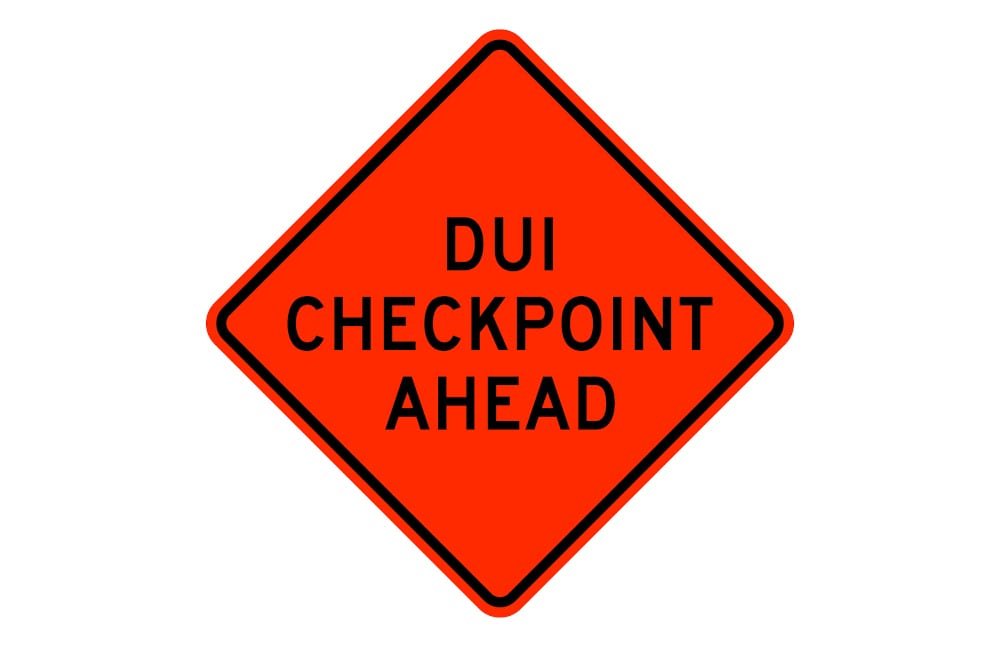
Ontario police will conduct DUI checkpoints during the holiday season as part of their annual Festive RIDE campaign, which runs until January 1st.
With the campaign in full force, it seems like an appropriate time to consider how effective this program is at preventing impaired driving.
Mass Tsang DUI criminal defence lawyers believe that the sobriety checkpoints are more effective as a deterrence tool than they are as an enforcement one.
Enacted into law in 2019, mandatory alcohol screening is among the most effective government initiatives to address impaired driving.
The Supreme Court of Canada has upheld the constitutionality of DUI checkpoints.
The 1/2/3 rule about drinking may help prevent drivers from getting a DUI at a sobriety checkpoint, but it’s not guaranteed.
With the holiday season upon us, Ontario police have begun making a concerted effort to ensure highway safety by proactively targeting impaired drivers. The linchpin of this effort is the annual
Festive RIDE (Reduce Impaired Driving Everywhere) campaign
, launched by police services across the province on November 20th and continuing until January 1st. The holiday-oriented campaign is a core component of Ontario Ride, an anti-impaired-driving program founded in 1977. The initiative relies on sobriety checkpoints to identify motorists who are driving under the influence (DUI) of alcohol and/or drugs, and public outreach to warn people about the dangers of impaired driving.
With Festive Ride now in full force, it seems like an appropriate time to consider the effectiveness of DUI checkpoints and highlight the facts and myths the public has about them. With a solid understanding of DUI checkpoints in Ontario, the
DUI criminal defence lawyers
of the Greater Toronto Area’s Mass Tsang law firm are well-positioned to tell you what you need to know. Let’s see what they have to say by considering their responses to the most frequently asked questions they hear from clients about DUI checkpoints and Ontario RIDE.
Are DUI Checkpoints Effective at Reducing Drunk Driving?
When asked about the success rate of DUI checkpoints, Mass Tsang managing partner
Jeff Mass
explains that their effectiveness can be assessed in two primary ways: the impaired driver detection rate and their deterrence value. The first is hard to quantify due to a relative lack of national and provincial checkpoint-specific data. Based on various municipal and regional studies, DUI checkpoints detect impairment in about 2% of drivers stopped on average.
“While that rate might seem low,”
says Jeff,
“every impaired driver taken off the road marks a success.”
Jeff adds that DUI checkpoint effectiveness is probably much greater with its deterrence value.
“Public outreach is a key component of DUI checkpoint programs across the country, with police warning drivers that they plan to be out in force manning checkpoints. This undoubtedly makes many drivers think twice about getting behind the wheel after they’ve consumed alcohol or drugs,”
he concludes.
Are DUI Checkpoints the Most Effective Tool for Reducing Impaired Driving?
Jeff’s co-managing Mass Tsang partner,
Robbie Tsang
, says that while DUI checkpoints undoubtedly helped reduce the country’s impaired driving rates over the past two decades, mandatory alcohol screening (MAS) made them much more effective.
“Before legislative changes were enacted in 2019, Canadian police needed probable cause to screen a driver for alcohol or drug impairment,”
he says.
“Whether at a sobriety checkpoint, during a traffic stop, or in any situation, an officer needed to identify reasonable grounds to demand screening, yet alcohol and drug impairment is not always apparent."
“The game changed in 2019, when the police were authorized to demand MAS of any driver,”
he continues.
“DUI arrests jumped that year due to mandatory screening and a rise in drug-impaired driving due to cannabis legalization. However, I believe that DUI arrest rates are again trending down as the motoring public — and many who may have previously considered driving while impaired — have become aware of MAS and what a powerful tool it is for police to identify and arrest drunk drivers.”
What Does the Supreme Court Say About DUI Checkpoints and MAS?
If you’ve heard that DUI checkpoints and MAS are unconstitutional, and, thus, open to courtroom challenges for violating Charter Rights, we can report that the Supreme Court of Canada upheld the legality of DUI checkpoints in its
Dedman v. The Queen [1985] 2 S.C.R. 2
decision. In its 7-2 decision, the justices determined that sobriety checkpoints are a reasonable and limited infringement of Charter Rights based on the public interest in reducing impaired driving traffic deaths. Subsequent high court decisions have solidified their legality in relation to Charter Rights.
However, in
R. v. Mellenthin [1992] 3 S.C.R. 615
, the Supreme Court established limits on the actions the police may take during sobriety checkpoints. In the absence of reasonable grounds to suspect other criminal activity conducted by vehicle occupants, police can only check the driver’s sobriety and driver’s license, as well as the vehicle’s ownership, insurance, and mechanical fitness. Police who go beyond these actions during a DUI checkpoint are violating the motorist’s Charter Rights.
As for MAS, provincial high courts have rejected Charter Rights challenges to the law in at least six cases, based on the same rationale that has upheld the legality of DUI checkpoints. To date, the Supreme Court has not yet agreed to hear a related case that might definitively settle the issue.
What New Technologies Are the Police Using with DUI Checkpoints?
The technology used in approved screening devices (ASDs) for DUI checkpoints has undergone significant changes over the past two decades, enhancing their reliability and boosting impairment detection rates. Additionally, police departments nationwide are increasingly adopting oral fluid drug screening devices to detect drug impairment in drivers. However, despite advances in technology, readings from these devices cannot be used in court to prove a criminal DUI. Instead, the readings allow the police to demand additional breathalyzer or blood testing, which provides them with court-admissible evidence of impairment. Additionally, most provinces allow the police to administratively penalize drivers whose ASD results indicate a level of impairment below the legal criminal DUI threshold.
Whatever the technology, it’s essential to know that the law codifies the refusal of roadside screening at a DUI checkpoint, or additional breathalyzer or blood testing as warranted by ASD results, the same as a criminal DUI.
Does the 1/2/3 Rule About Drinking Really Work?
As lawyers, we cannot tell you whether the 1/2/3 rule about drinking will prevent you from getting a DUI at a sobriety checkpoint. The rule, based on the average person’s ability to metabolize one standard drink per hour, is as follows:
One drink per hour.
No more than two drinks for women on a single occasion before driving.
No more than three drinks for men on a single occasion before driving.
Holding to this rule is believed to keep most people under the legal blood alcohol concentration limit of 0.08%. However, it depends on keeping track of time, only drinking standard alcohol portions, and other factors. Additionally, it may not be effective at preventing a driver from breaching the 0.05% warn range, which could trigger police to issue administrative penalties, including license suspensions, fines, and vehicle impoundment.
What Are Some Other Myths About DUI Checkpoints in Canada?
We’ve covered the facts about DUI checkpoints and exposed a couple of myths, but let’s close by highlighting a couple of other common myths:
Drivers can legally turn around or otherwise try to evade a checkpoint if they see it in time — they can, but the police can and will pursue and stop those who try to pull an evasive manoeuvre.
DUI checkpoints must be pre-announced or advertised — police agencies usually publicize their intention to conduct them because of their impaired driving deterrence value. However, they are not legally required to announce them.
I have the right to consult with a lawyer before submitting to roadside screening — nope, that right only kicks in after you fail roadside testing or are arrested.
DUI Checkpoints – Facts vs. Myths
Statement
Fact or Myth
Clarification
DUI checkpoints are illegal and violate Charter Rights
Myth
The Supreme Court upheld their legality in Dedman v. The Queen (1985)
Police must announce the location of all DUI checkpoints
Myth
Announcements are common for deterrence, but not required by law
You can refuse roadside screening without consequence
Myth
Refusal is treated as a criminal DUI
DUI checkpoints are more about catching impaired drivers than deterrence
Myth
Their main value is deterrence, especially during campaigns like Festive RIDE
Enacted in 2019, MAS allows screening without suspicion
Oral fluid drug tests at checkpoints can result in criminal charges
Myth
These tests prompt further testing but aren’t court-admissible on their own
You have the right to talk to a lawyer before submitting to roadside screening
Myth
That right only applies after failure of roadside testing or upon arrest
Drivers can legally turn away from a checkpoint without consequence
Myth
Police can pursue and stop any vehicle evading a checkpoint
Arrested Due to a DUI Checkpoint in the GTA? — Consult with Mass Tsang
If Greater Toronto Area police arrest you for DUI due to a sobriety checkpoint, consult with the experienced DUI criminal defence lawyers of Mass Tsang. With decades of experience defending our clients against DUI charges in Toronto, our expert defence team has won more than 1,200 cases, acheiving a 91% success rate. To schedule your free case evaluation,
contact
us today.