No specific charge automatically comes with an ankle monitor in Ontario; a court orders electronic monitoring based on the facts and risk in a specific case, most often as a bail condition, and sometimes as part of a sentence.
There isn't a fixed list of offences that trigger it. This guide explains where electronic monitoring actually comes from in Ontario, who decides to use it, and what happens if the conditions are broken.
Electronic monitoring in Ontario isn't tied to a specific list of charges; a court orders it based on the individual case, most commonly as a bail condition.
For charges involving violence against a person, the bail court has to consider whether an electronic monitoring condition is desirable, but only if the Crown asks for one.
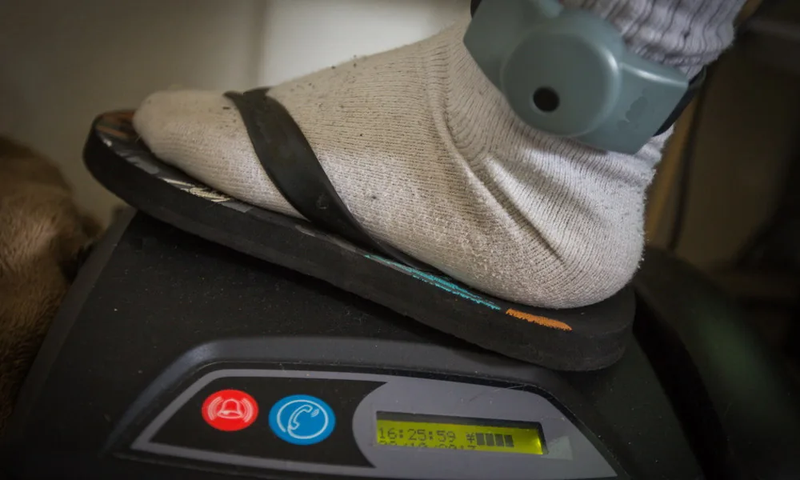
Ontario's GPS monitoring program is run for the Ministry of the Solicitor General by a private contractor and can be used with bail release orders, conditional sentences and temporary absence permits.
The provincial program is not available for probation orders or for young persons.
Breaching an electronic monitoring condition is treated like breaching any other release or sentence condition, and can lead to a separate charge.
A common assumption is that certain charges automatically come with an ankle monitor. That isn't how it works. Electronic monitoring is a condition a court can attach to a release or a sentence, and whether it's used depends on the specific facts of the case, including the risk assessment for that person, not a fixed list tied to the charge itself. The same charge can result in an ankle monitor for one person and not another, depending entirely on the circumstances.
Electronic Monitoring as a Bail Condition
Most ankle monitors in Ontario start at a bail hearing. Under
section 515(4.2)
of the Criminal Code, when someone is charged with certain offences, including any offence in which violence against a person was used, threatened or attempted, the justice has to consider whether conditions are needed for the safety of a victim, a witness or anyone else. One of those possible conditions is wearing an electronic monitoring device, but only if the Crown asks for it. Being charged with a violent offence doesn't mean a monitor will be ordered; it means the court has to weigh it when the Crown raises it. For other charges, a justice can still add monitoring under the general power to impose other reasonable conditions of release. If a bail hearing is coming up, a
bail hearing lawyer
can tell you whether monitoring is likely to be raised in your case. The monitoring condition was added in 2023 by amendments aimed at intimate partner violence; how that plays out in domestic files is covered on our
domestic assault lawyers
page.
Electronic Monitoring as Part of a Sentence
After a conviction, an ankle monitor usually comes with a conditional sentence served in the community, often called house arrest.
Section 742.3
of the Criminal Code doesn't name electronic monitoring; a judge adds it under the power to impose other reasonable conditions, and Ontario's GPS program is set up to support conditional sentences. It isn't available for probation orders. We explain how these sentences work in our guides to
conditional sentence orders
and
house arrest in Canada
.
How the Technology Actually Works in Ontario
Ontario's
GPS monitoring program
is run by Recovery Science Corporation under a contract with the Ministry of the Solicitor General. It can be used with bail release orders, conditional sentences and temporary absence permits, but not with probation orders, and it isn't available for young persons. The person wears a GPS ankle unit, and a central system reports violations, equipment problems and monitoring issues to the operator, which investigates them under set protocols.
What Happens If the Monitor Reports a Violation
A reported violation of an electronic monitoring condition is treated the same way any other breach of a release or sentence condition is treated: it can lead to a separate charge, such as failing to comply with a condition, on top of whatever the original matter was. Given how sensitive the equipment can be to things like a dead phone battery, a dead zone, or a scheduling misunderstanding, keeping a clear record of your compliance and raising any equipment issue immediately, rather than after the fact, matters.
Conclusion
There is no fixed list of crimes that automatically come with an ankle monitor in Ontario. It's a condition a court can attach at bail or as part of a conditional sentence, based on the facts of the specific case, and for charges involving violence the court has to consider it when the Crown asks. If electronic monitoring is part of your case, knowing exactly which order it's attached to matters for what happens if something goes wrong with it.
Secure Experienced Criminal Defence with Mass Tsang
Whether electronic monitoring applies to your bail application, or whether it's being proposed as part of a sentence, the specific facts of your case drive that decision, not the charge alone.
Contact us
for a free, confidential review of a bail or sentencing matter involving electronic monitoring in Ontario.
FAQ
None. Electronic monitoring isn't tied to a specific list of offences; a court decides whether to use it based on the facts and risk in a specific case.
Not automatically. For charges involving violence against a person, including an intimate partner, the bail court has to consider an electronic monitoring condition if the Crown asks for one.
Recovery Science Corporation runs Ontario's GPS monitoring program under a contract with the Ministry of the Solicitor General.
Not through the provincial program. Ontario's GPS monitoring program is not available for young persons.
A reported violation is treated seriously regardless of cause, so document the issue immediately, such as a dead battery or a dead zone, and raise it with your monitoring provider and lawyer right away.
Yes, a breach of an electronic monitoring condition is treated like breaching any other release or sentence condition and can lead to a separate charge.
No. It depends on the individual risk assessment and the facts of the case, not the charge itself.
The province's program page doesn't set out costs, so confirm who pays in your situation with your lawyer before agreeing to a monitoring condition.