Overview:
-
Roadside breath screening has emerged as one of the most powerful tools Ontario Police use to identify and arrest impaired drivers.
-
2018 revisions to the Criminal Code allow Ontario Police to demand roadside breath testing from any driver without probable cause.
-
Along with breath testing, police use other roadside screening tools, such as standardized field sobriety testing and approved drug screening equipment to identify impaired drivers.
-
The legal experts of the GTA’s Mass Tsang law firm detail frequently asked questions to help you understand how Ontario Police use roadside screening tools and when the results can be challenged.
Due to 2018 Criminal Code revisions to impaired driving laws, roadside breath screening has emerged as the most powerful tool police use to identify and arrest drunk drivers, says
Robbie Tsang
, co-managing partner of the Greater Toronto Area’s Mass Tsang law firm.
“Under the revised laws, DUI roadside testing in Canada no longer requires police to have probable cause that a driver may be impaired,”
he notes.
“Instead, police have the authority to demand that any driver undergo mandatory alcohol screening.”
Mass Tsang co-managing partner
Jeff Mass
adds that the majority of their DUI defence clients face charges based on impaired driving roadside tests.
“Naturally, our clients have numerous questions about challenging roadside screening results and the legality of roadside breath tests.”
Given our client base’s relative confusion over roadside screening for DUI and unfamiliarity with DUI defences for roadside testing, now seems like an opportune time to explore the issue in this blog posting. Read on for the most frequently asked questions we hear from our GTA clients about the issue.
When Are Ontario Police Legally Allowed to Demand Roadside Testing?
The grounds for roadside screening for alcohol or drug-impaired driving are codified by the Criminal Code, which also has distinct protocols dictating how police test impairment in Canada. When the police fail to adhere to these protocols — which occurs more frequently than you might expect — defendants can usually challenge the related screening results in court, which may lead to dismissal or stay of the charges.
Section 320.27
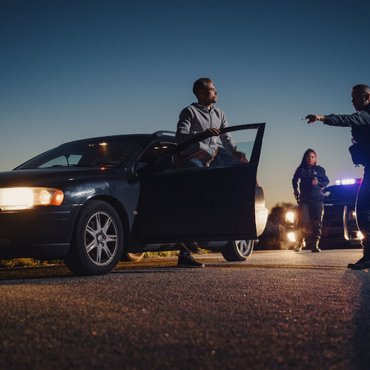
of the Code gives police the authority to demand that anyone submit to screening or testing if they have “reasonable grounds to suspect [the] person has alcohol or a drug in their body” and has operated a motor vehicle within the preceding three hours. For suspected alcohol impairment, an officer can conduct roadside testing with an approved breath screening device (ASD) or by requiring the driver to undergo “physical coordination tests prescribed by regulation.” The latter can also be used to screen for suspected drug impairment, and police can also test “bodily substances” (saliva) with approved drug screening equipment.
As added in 2018, Section 320.27(2) of the Code gives a police officer the authority to require any driver to submit to mandatory alcohol screening (MAS), provided the officer has an approved screening device in their possession. This latter point is critical as Ontario courts have ruled that officers cannot demand a driver submit to MAS and then secure an ASD from another officer because they did not have one in their possession.
If Ontario Police demand any form of roadside testing or screening, a
driver’s refusal
to comply is a criminal offence, charged as a DUI-related offence, and carries the same penalties as a standard DUI.
Ontario Police rely on three federally approved tools under the Criminal Code to conduct roadside screening for alcohol and/or drug impairment. They are:
Standardized Field Sobriety Testing (SFST)
SFST consists of three physical coordination tests that police are legally authorized to use to assess potential impairment. Only administered by specially trained and certified officers, the coordination tests include:
-
Horizontal gaze nystagmus
-
Walk and turn
-
One-leg stand
Approved Screening Devices (Alcohol)
ASDs are handheld, portable breath-testing instruments to measure a driver’s blood alcohol concentration BAC. The Criminal Code authorizes officers to demand that any driver submit to MAS with the device, provided the officer has the instrument in their possession. The nine different ASDs approved for police use generally operate on a pass/warn/fail basis: BACs below 0.049 represent a pass, 0.05 and 0.079 generate a warn, and those above 0.08 generate a fail, leading to a DUI arrest. In Ontario, a warn range reading can result in administrative penalties that include short-term license suspensions, fines, and mandatory enrollment in alcohol/drug education or treatment programs.
Approved Drug Screening Equipment (ADSE)
Police can order a driver to undergo ADSE testing only if they have reasonable grounds to suspect drug impairment. These instruments detect concentrations of illegal drugs in the driver’s saliva, with positive results leading to further investigation, such as drug recognition evaluation (DRE) by a certified evaluator or demands for blood sampling.
Roadside screening results from these tools can be used to justify the driver’s arrest for DUI and further demands for breathalyzer testing, DRE, and/or blood sampling. However, the admissibility of these results as evidence at trial is limited and never serves as the sole basis to prove impairment.
Are Roadside Breath Tests Always Accurate?
Canadian courts generally accept roadside breath test accuracy provided the instruments are properly maintained, calibrated, and operated. Sources of device inaccuracy or errors that have been recognized by courts include:
-
The presence of residual alcohol in the mouth from recent drinking, burping, regurgitation, and/or mouthwash use.
-
Calibration/maintenance issues.
-
Operator error or an officer’s failure to follow correct ASD protocols.
-
Temperature extremes.
-
Individual breathing pattern variables.
Does Failing a roadside Test Mean an Automatic Conviction?
No, roadside screening results are not sufficient evidence alone to prove guilt beyond a reasonable doubt in impaired driving cases. Test results are primarily used to justify lawful, reasonable grounds for police to conduct further screening via breathalyzer, DRE, and/or blood sampling.
Can Medical Conditions Affect Roadside Screening Results?
Canadian courts have recognized medical conditions as potential sources of inaccuracy in roadside screening/testing for impaired driving. Medical conditions that can affect ASD results include:
-
Respiratory conditions
-
Acid reflux
-
Diabetes
SFST results can be compromised by:
-
Physical injuries
-
Neurological conditions
-
Hypoglycemia
-
Anxiety
ADSE results may be affected by dry mouth caused by medications or Sjogren’s syndrome, as well as oral health issues, though related challenges in the courts have been limited.
How Can Roadside Screening Results Be Challenged in Court?
Experienced
DUI criminal defence lawyers
— like those at Mass Tsang — are highly adept at raising challenges to roadside screening results, and successful challenges typically weaken subsequent evidence collected during the police investigation. In some cases, if a court finds the roadside screening results inadmissible, it can nullify the justification for further screening via breathalyzer, DRE, and/or blood sampling.
Common legal defence challenges to roadside screening results include:
-
A police officer’s lack of “reasonable” suspicion or grounds to demand SFST or ADSE screening (not possible with MAS results).
-
A police officer’s breach of the driver’s Charter Rights.
-
Screening results reliability and accuracy.
-
Procedural errors by an officer (failing to follow proper screening protocols).
-
Inconsistencies in a police officer’s evidence or testimony.
Does the Criminal Code Also Allow for Mandatory Roadside Drug Screening?
No. The Criminal Code requires the police to have reasonable grounds to believe that a driver is impaired by drugs before demanding that they undergo roadside drug screening.
Consult with Mass Tsang to Mount a Robust Defence Against DUI Charges
If you’re facing DUI charges in the Greater Toronto Area arising from roadside screening for impairment, consult with the legal experts at Mass Tsang. Our lawyers are highly adept at uncovering flaws with roadside screening and have helped thousands of GTA clients successfully challenge their DUIs. To learn how they can help you mount a robust defence against your impaired driving charges, schedule a free consultation by
contacting us
today.
*Note:
DFSA Test Ontario was one of your listed keywords and incorporated into a FAQ. However, DFSA stands for drug-facilitated sexual assault, and the testing is conducted to detect the presence of incapacitating drugs in sexual assault victims. There is no DFSA testing in the context of Canadian impaired driving laws.
**Note:
Likewise, ASAT alcohol screening device doesn’t really work. ASAT stands for approved screening alcohol test; however, the standard legal and police terminology across the country refers to it as “approved screening device (ASD).”