Impaired driving laws in Ontario and across Canada have changed significantly over the past decade. One of the most impactful developments was the introduction of
mandatory alcohol screening
, which expanded police powers to demand roadside breath samples from drivers even without suspicion of impairment.
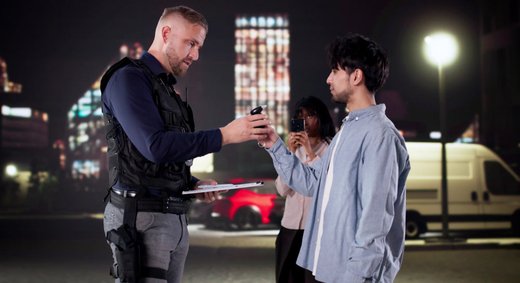
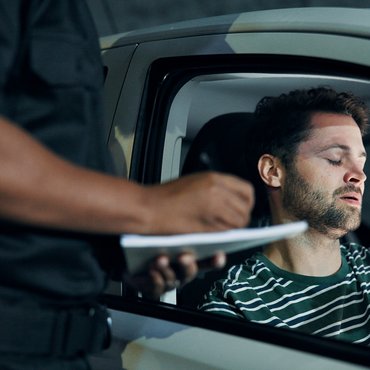
As a result, many drivers now face a critical, often misunderstood question during routine traffic stops: Can you legally refuse a roadside breath test in Ontario, and what happens if you do?
While the short answer is that refusal is physically possible, the legal consequences of refusing a roadside breath test are severe and, in many cases, mirror or
exceed
those of a standard impaired-driving conviction.
This article explains roadside breath testing in Ontario under the
Criminal Code
, the
Canadian Charter of Rights and Freedoms
, and Ontario’s
Highway Traffic Act
: what police may demand, what drivers must do, and how refusal cases are defended.
Key Takeaways
Police in Ontario may demand a roadside breath test without suspicion under federal mandatory alcohol screening, if they have an approved screening device (ASD).
Refusing a lawful demand is a
criminal offence
under s. 320.15 — not a traffic ticket.
First-offence refusal carries a
higher minimum fine ($2,000)
than a basic first impaired-operation conviction ($1,000).
Drivers generally do
not
have the right to speak to a lawyer before providing a roadside ASD sample.
Police must follow procedural rules; failures may form the basis of a defence.
Medical or cognitive conditions may constitute a reasonable excuse in limited cases, with supporting evidence.
The Legal Basis for Roadside Breath Testing in Canada
Mandatory Alcohol Screening Under the Criminal Code
Roadside breath testing in Canada is governed by Part VIII.1 of the
Criminal Code
, specifically sections
320.27
and
320.15
.
Prior to 2018, police were generally required to have a reasonable suspicion that a driver had alcohol in their body before demanding a roadside breath sample. That changed with Bill C-46.
Under
s. 320.27(2)
, a peace officer who has an approved screening device in their possession may, in the lawful exercise of their powers, require a person operating a motor vehicle to immediately provide samples of breath that enable a proper analysis.
This provision forms the legal foundation for mandatory roadside screening used by the Ontario Provincial Police and municipal police services across Ontario. How that demand fits into the broader
DUI arrest process in Ontario
— stop, screening, arrest, station testing — is a separate timeline question; this page focuses on the refusal choice at the roadside ASD stage.
Can You Legally Refuse a Roadside Breath Test in Ontario?
From a purely physical standpoint, a driver can refuse to comply with a police demand. Legally, however, refusal is a criminal offence.
Under section 320.15(1) of the
Criminal Code
, it is an offence to:
Refuse to comply with a lawful demand for a breath sample, or
Fail to provide a suitable sample without a reasonable excuse
Refusal typically triggers immediate arrest and criminal charges. The broader meaning of
refusal or failure to provide a sample
— including station breath and blood demands — is related but wider than the roadside ASD question.
Federal Criminal Consequences of Refusing a Breath Test
Refusing a roadside breath test is punished under
s. 320.19
. The offence shares the same basic hybrid framework as impaired operation and over 80,
but
Parliament set a
higher first-offence minimum fine for refusal
.
Criminal Penalties Upon Conviction
For a conviction under s. 320.15(1), typical first-look federal consequences include:
Consequence
First offence (typical floor)
Notes
Minimum fine
$2,000 (s. 320.19(4))
Higher than the $1,000 floor for a basic first s. 320.14(1) conviction
Driving prohibition
Mandatory (s. 320.24)
Length depends on offence history and sentencing
Second offence
Minimum 30 days jail
Escalates further for subsequent offences
Subsequent offences
Minimum 120 days jail
Plus longer prohibitions
Criminal record
Yes, on conviction
Unless later addressed through a discharge (rare on these facts) or record suspension
A conviction also results in a permanent criminal record unless later addressed through a discharge or record suspension where legally available.
Do You Have the Right to Speak to a Lawyer Before a Breath Test?
The right to counsel under
s. 10(b)
of the
Charter
arises upon arrest or detention. Courts have consistently treated
immediate roadside ASD compliance
as compatible with brief investigative detention: delaying to consult a lawyer would defeat the purpose of roadside screening.
Drivers may exercise the right to counsel after arrest — for example, before evidentiary breath testing at the station — not as a free-standing right to postpone a lawful roadside ASD demand.
Ontario-Specific (Provincial) Consequences of Refusal
In addition to criminal charges, refusal triggers automatic administrative penalties under Ontario law. Those provincial consequences operate even if the criminal charge is later withdrawn or defeated.
Immediate Penalties Under the Highway Traffic Act
Typical immediate administrative consequences for refusal include:
Exact dollar amounts and forms can change with Ontario’s administrative-penalty schedules; counsel should confirm the notices actually issued on your file.
Post-Conviction Provincial Consequences
If convicted, drivers typically face:
A further licence suspension / reinstatement pathway under Ontario rules
Mandatory enrolment in Ontario’s Back on Track program
Ignition-interlock requirements upon reinstatement in many cases
Licence reinstatement fees
High-risk insurance premiums that can run into thousands of dollars annually
These provincial consequences apply regardless of whether the driver was actually impaired.
How Roadside Breath Testing Works in Practice
Driver Obligations
Drivers are legally required to:
Comply promptly with a lawful demand
Provide a suitable breath sample
Follow clear police instructions
Failure to do so may be interpreted as a refusal or failure to provide.
Police Obligations
Police officers must:
Have lawful authority for the traffic stop
Possess an approved screening device (for a s. 320.27(2) demand)
Clearly communicate the demand and consequences
Ensure the driver understands the instructions
Confirm the driver is physically capable of providing a sample
Ensure the device is functioning properly
Police cannot use force to compel a breath sample.
Explicit refusal
, where the driver verbally declines
Failure to provide a suitable sample
, even if the mouthpiece is used
In the second scenario, police must demonstrate that the driver failed to provide a sample that enables a proper analysis — often framed as inadequate airflow or repeated unsuccessful attempts without a reasonable excuse.
Defences to Refusing a Roadside Breath Test
Defending refusal charges is challenging but not impossible. Successful defences typically fall into two categories.
1. Procedural or Legal Errors by Police
Examples include:
No approved screening device present at the time of a mandatory-screening demand
Improper explanation of legal consequences
Unclear or confusing instructions
Charter
breaches in the surrounding detention or arrest
An unlawful stop or an improper demand pathway
Courts have dismissed charges where officers attempted to call for a device later, rather than having one in their possession at the time of a s. 320.27(2) demand.
2. Reasonable Excuse (Medical or Cognitive)
A refusal may be excused if the driver was genuinely unable to provide a sample due to:
Serious respiratory conditions (e.g., COPD, severe asthma)
Physical disabilities affecting breathing
Recent oral or chest surgery
Cognitive impairment preventing understanding of the demand
These defences require medical or other supporting evidence and are assessed strictly.
Should You Ever Refuse a Breath Test?
From a legal defence perspective, the answer is almost always no.
Refusal charges:
Are often easier for the Crown to prove than impairment
Do not require proof that the driver was actually impaired
Carry a
higher
first-offence minimum fine than a basic impaired-operation conviction
Most
experienced DUI lawyers
advise compliance with a lawful roadside demand, followed by immediate legal counsel if charges arise.
Consulting a DUI Defence Lawyer in Ontario
Refusing a roadside breath test exposes drivers to some of the harshest consequences in Canadian impaired-driving law. Early advice can identify procedural errors, assess
Charter
issues, and protect licensing options before positions harden.
“The moment a refusal occurs, the case becomes highly technical. Early defence strategy matters enormously,”
—
Jeff Mass, Criminal Defence Lawyer
DUI Defence Lawyers in Toronto: Mass Tsang
The Greater Toronto Area
lawyers at Mass Tsang
have decades of experience defending impaired-driving and refusal cases, with close attention to police procedure and
Charter
rights. If you are facing refusal charges, seek advice promptly.
Frequently Asked Questions About Roadside Breath Tests in Ontario
You can physically refuse, but legally a refusal is a criminal offence under the
Criminal Code
. Refusing a lawful demand can result in arrest and impaired-driving–equivalent (or more severe) charges.
Refusal may lead to immediate arrest, criminal charges, a minimum
$2,000
fine on a first conviction, a criminal record upon conviction, and licence suspension and vehicle impoundment under Ontario law.
No. Under mandatory alcohol screening, police may demand a breath sample from any lawfully stopped driver if they have an approved screening device in their possession.
No. The right to consult a lawyer arises on arrest or detention for fuller consultation after the roadside stage — not as a right to postpone a lawful ASD demand.
They sit in the same Part VIII.1 punishment framework, but a first refusal carries a
higher minimum fine ($2,000)
than a basic first impaired-operation conviction ($1,000). Repeat-offence jail minimums and driving prohibitions remain serious for both.
Defences may exist if police failed to follow proper procedures, if the demand was unlawful, or if the driver had a genuine medical or cognitive condition preventing them from providing a breath sample.