Can You Be Charged with a DUI Months Later in Ontario?
Rate this article
1
votes —
5.0
Updated:
5 hours ago
Views:
6
Yes.
In Ontario, police and the Crown can lay a DUI (impaired driving) charge weeks or months after a roadside stop, especially where a collision, a hospital blood sample, or a longer investigation is involved. Impaired driving offences under the Criminal Code are "hybrid" offences, meaning the Crown can choose to proceed by indictment or by summary conviction, and that choice affects whether a strict time limit applies.
Yes, DUI-type charges can be laid months after a stop, particularly following a collision, a hospital sample, or a delayed identification.
Impaired driving offences are
hybrid offences
; until the Crown elects how to proceed, they are generally treated as indictable, which carries no fixed limitation period.
If the Crown ultimately proceeds by summary conviction,
section 786(2)
of the Criminal Code sets a
12-month limit
from when the offence occurred, unless the prosecutor and the accused agree to extend it.
A delayed charge
does not automatically mean a weaker case
, or an automatically harsher one; the penalties still depend on the facts, not on how much time passed.
The Charter's right to trial within a reasonable time (
section 11(b)
, the framework from
R. v. Jordan
) protects against unreasonable delay once a charge is laid, which is a separate question from whether a charge can be laid at all.
If police contact you months later, what you say, or don't say, still matters;
getting legal advice before speaking with investigators
is generally worth doing.
An impaired driving investigation does not have to end at the roadside. Toxicology results, collision reconstruction, witness statements, and video evidence can all take time to come together, and a charge can follow once that work is done. This is different from being released without charge at the scene and simply not hearing anything further; a delayed charge means the investigation is continuing, not that it has closed.
Situations Where DUI Charges Arrive Later
A few recurring situations account for most delayed impaired driving charges in Ontario. In each, the common thread is that some piece of the investigation, a medical priority, a forensic result, or a confirmed identity, simply was not available at the roadside, and the charge follows once it is.
After a Collision or Hospital Visit
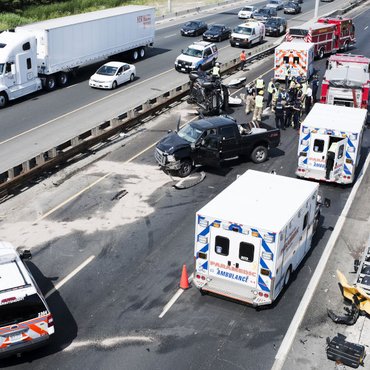
Where a collision causes injury, medical treatment takes priority over an immediate charge, and obtaining a hospital blood sample or medical records often requires a separate judicial authorization. Toxicology analysis of a blood sample can also take time. A charge in these cases can realistically follow well after the collision itself.
When Identity or Vehicle Ownership Is Sorted Out Later
Where a driver leaves the scene, or is not immediately identified, police may need to work from licence plate registration, witness statements, or surveillance video to confirm who was driving. That identification step can take time, and a charge naturally follows it rather than preceding it.
Is There a Time Limit to Lay a DUI Charge?
It depends on how the Crown ultimately proceeds. Impaired driving offences under
section 320.14
of the Criminal Code are hybrid, meaning the Crown can elect to prosecute by indictment or by summary conviction, and that election does not have to be made at the moment the charge is laid. Hybrid offences are generally treated as indictable for limitation purposes until that election is made, so a charge laid many months after the fact is not automatically out of time. If the Crown does proceed by summary conviction, section 786(2) sets a 12-month limit running from when the offence occurred, extendable only if the prosecutor and the accused agree; without that agreement, a purely summary charge laid outside the 12-month window can be challenged. In practice, this means a delayed DUI charge is legally possible well past the one-year mark, particularly where the Crown is proceeding, or may proceed, by indictment, and particularly in the collision or delayed-identification scenarios described above.
What to Do if Police Contact You Months Later
Being contacted by police long after a stop or collision does not mean the outcome is decided, but it should be taken seriously. It generally helps to get the details of who is contacting you and why in writing where possible, avoid guessing at facts you don't clearly remember, and preserve any documents or records connected to the incident, including your own notes, repair estimates, or medical records if a collision was involved. Confirm the officer's name, badge number, and detachment, and ask what the contact is actually about before agreeing to anything. Ignoring a formal notice, such as a summons, an appearance notice or a court date, can create separate problems on top of the original allegation.
Should You Speak to Investigators Without Counsel?
You are generally not required to give a statement to police beyond identifying yourself, and anything said can be used later. As an educational matter, getting legal advice before agreeing to an interview, even an apparently informal one, gives a lawyer the chance to review what's actually known about the case first.
How Delayed-Charge Cases Are Often Built
Delayed-charge files often lean more heavily on documentary and forensic evidence, since the roadside moment itself is further in the past and officer memory of the stop matters less than what was recorded at the time. That can include toxicology reports, collision reconstruction, hospital records obtained under a judicial authorization, and the disclosure package the Crown eventually provides to the defence. Reviewing that disclosure closely, rather than assuming a delayed charge is automatically weaker or stronger, is where a real defence assessment starts. Where the allegation involves a breath or blood sample taken well after the stop, the separate offence of
refusing or failing to provide a sample
may also come into play.
Does a Delayed Charge Change the Penalties?
Not inherently. The penalties that could follow a conviction are driven by the facts of the offence, including any aggravating factors such as a collision, injury, or a very high reading, not by how long it took to lay the charge. Separately, once a charge is laid, section 11(b) of the Charter gives a person charged the right to be tried within a reasonable time; the Supreme Court's framework in R. v. Jordan sets presumptive ceilings of 18 months in provincial court and 30 months in superior court (or provincial court cases with a preliminary inquiry), beyond which delay is presumed unreasonable unless the Crown can show exceptional circumstances outside its control. That protection addresses delay in getting to trial after a charge, which is a different question from whether a charge could be laid months after the incident in the first place, and it's worth having both questions reviewed separately by counsel.
Conclusion
A DUI charge in Ontario can arrive months after the underlying stop or collision, particularly where the investigation involves a hospital sample, forensic analysis, or a delayed identification. Because impaired driving offences are hybrid, a charge is not automatically out of time just because a year has passed, and the actual penalties still depend on the facts rather than the timeline. If you're aware of an ongoing investigation or have been contacted by police about an earlier incident, an early conversation with defence counsel is generally worth having before you say anything further.
Secure Experienced Criminal Defence with Mass Tsang
Because delayed-charge cases often turn on evidence gathered well after the incident, speaking with an
Ontario DUI defence lawyer
as soon as you're aware of an investigation, rather than waiting for a formal charge, generally gives counsel more room to review the file properly. Mass Tsang's Toronto-based team can review the specifics of a delayed or pending DUI matter during a consultation.
Contact us
for a free consultation.
FAQ
Yes. Impaired driving investigations can continue well after a roadside stop, particularly where a collision, hospital sample, or delayed identification is involved. Because these offences are hybrid, a charge is not automatically barred just because months have passed.
Yes. Where a collision is involved, police often need time for medical priorities, toxicology results, or collision reconstruction before laying a charge, so not being arrested at the scene does not mean the investigation has ended.
It depends on how the Crown proceeds. If the Crown proceeds by summary conviction, section 786(2) of the Criminal Code sets a 12-month limit from the date of the offence. If the Crown proceeds by indictment, there is no fixed limitation period.
Leaving the province does not end an Ontario investigation. Depending on the circumstances, you may be contacted at a new address, asked to return for a court date, or, in some cases, face separate procedures; get legal advice promptly if this applies to you.
Either is possible, depending on the circumstances; a summons or appearance notice is more common than an arrest for many delayed charges, but this depends heavily on the facts and the jurisdiction involved.
You are generally not required to give a statement beyond identifying yourself, and anything you say can be used later. Getting legal advice before agreeing to an interview is generally worth doing, even if the call seems informal.
Not inherently. Sentencing still depends on the facts and any aggravating factors, not on how long it took to lay the charge. Separately, the Charter protects against unreasonable delay in getting to trial once a charge exists.
Keep any paperwork police gave you, note the date, time, and location of the stop, and write down what you remember while it's fresh, even if no charge follows immediately. These details can matter if a charge is laid later.