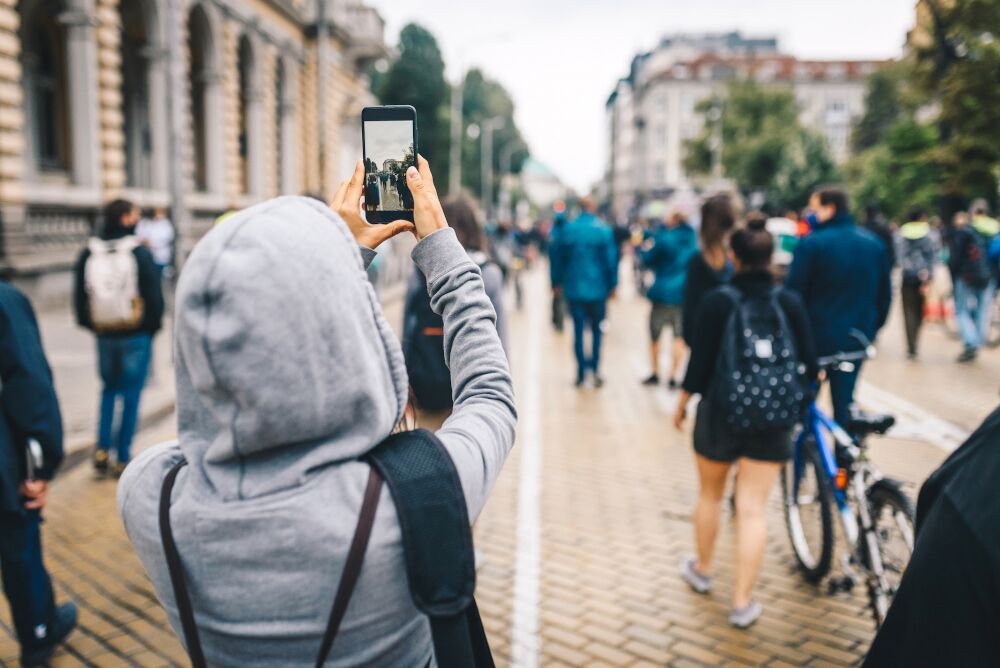
Video recording has become a regular part of modern life. Phones, doorbell cameras, smart home devices, and workplace surveillance capture millions of moments every day. Most Canadians record or appear in recordings without thinking twice. But when someone feels uncomfortable or believes their privacy has been violated, one question quickly arises:
Is it illegal to record someone without their consent in Canada?
The answer depends entirely on
where
the recording occurs,
how
it is done, and
for what purpose
.
Canada does not ban all non-consensual recordings. However, several
Criminal Code
provisions — including criminal harassment, intimidation, and voyeurism — can make recording without consent a serious offence.
Importantly, a recording that seems legal in public may be criminal if it becomes threatening, persistent, sexually motivated, or targeted at a person with a reasonable expectation of privacy. With decades of experience defending privacy-related and sexual offence allegations, the
lawyers
at Mass Tsang LLP understand how quickly an innocent recording can turn into a criminal investigation.
Key Takeaways
-
Recording someone without consent is not automatically illegal in Canada — it depends on context.
-
People generally have a reduced expectation of privacy in public, but recording can still become illegal through harassment, intimidation, or voyeurism.
-
Recording someone in a private or semi-private space without consent may engage criminal provisions or civil privacy remedies.
-
Surreptitious recording in circumstances of privacy — including recording for a sexual purpose — can lead to voyeurism charges under section 162 of the
Criminal Code
.
-
Persistent recording that causes a person reasonably to fear for their safety may lead to criminal harassment charges (s. 264).
-
Using recording to compel someone to do something, or stop doing something they have a lawful right to do, may become criminal intimidation (s. 423).
-
Voyeurism is a hybrid offence with a maximum of five years’ imprisonment on indictment and may lead to Sex Offender Information Registration Act (SOIRA) obligations depending on the case.
-
Strong legal defence often focuses on intent, context, privacy expectations, and constitutional rights.
As
Managing Partner, Jeff Mass
explains:
“People often assume that if they’re in public, anything goes. But Canadian law balances freedom of expression with privacy and safety. Context determines when a recording crosses the line.”
Public vs. Private Spaces — Why Context Matters
The legality of recording someone without their consent depends heavily on whether the person is in a public space or in a place where they have a reasonable expectation of privacy.
Recording in Public Spaces
Examples of public spaces:
-
Streets
-
Sidewalks
-
Parks
-
Public transit stations
-
Stores or malls (unless restricted by policy)
In these areas, courts generally find that people have a reduced expectation of privacy, and video recording is often lawful.
However, even in public spaces, recording can become criminal when:
1. It is persistent or obsessive — Criminal Harassment (s. 264)
Recording may engage criminal harassment if the accused engages in prohibited conduct (such as repeatedly following, watching, or threatening conduct) knowing that the other person is harassed, or being reckless as to that, and the conduct causes that person reasonably to fear for their safety or the safety of someone known to them.
Harassing behaviours can include:
-
Repeatedly following someone with a camera
-
Refusing to stop recording despite requests
-
Appearing to stalk or monitor someone
-
Targeted recording intended to intimidate
Penalties:
-
Up to 2 years less a day (summary conviction)
-
Up to 10 years (indictment)
2. It attempts to control or pressure someone — Criminal Intimidation (s. 423)
Intimidation can arise where a person, wrongfully and without lawful authority, uses prohibited conduct for the purpose of compelling another person to abstain from doing anything they have a lawful right to do, or to do anything they have a lawful right to abstain from doing.
Examples:
-
Filming someone aggressively to force them to leave an area
-
Recording employees to pressure them during a dispute
-
Surrounding someone with cameras as part of a protest
Penalty:
-
Up to 5 years’ imprisonment (indictable) or summary conviction
Partner
Robbie Tsang
notes:
“Just because you’re holding a camera doesn’t mean you’re shielded from criminal responsibility. If the recording becomes threatening, the law responds.”
Recording in Private or Semi-Private Spaces
Private spaces commonly include:
-
Homes
-
Apartments
-
Hotel rooms
-
Bathrooms
-
Change rooms
-
Locker rooms
-
Private offices
-
Bedrooms
In these environments, individuals often have a strong expectation of privacy. Secret or non-consensual recording can more readily engage criminal offences — particularly voyeurism — or civil privacy claims. Whether a specific recording is illegal still depends on the facts, including location, manner, purpose, and whether the recording was surreptitious.
Examples of high-risk conduct:
-
Secretly filming a guest in a private area of your home
-
Recording a roommate in a bathroom or bedroom without consent
-
Secretly placing cameras in Airbnbs, rentals, or workplaces
-
Entering a property to record without permission (which may also engage trespass)
Recording in private places may lead to:
-
Criminal Code
offences
-
Provincial trespass charges
-
Civil lawsuits for invasion of privacy
Video vs. Audio: One-Party Consent for Private Conversations
Many people searching about “recording without consent” are asking about
audio
— phone calls, in-person conversations, or virtual meetings — rather than video alone.
Under section 184 of the
Criminal Code
, it is generally an offence to knowingly intercept a private communication by means of a device. Canada follows a
one-party consent
rule: a person who is a party to the private communication may lawfully record it with their own consent, even if the other participant is unaware. Recording a private conversation you are
not
part of (for example, leaving a hidden audio device to capture others) can be illegal interception.
That audio rule does
not
give a free pass for video. A participant may lawfully record a conversation they are part of, yet still face risk if the visual recording is surreptitious in circumstances of privacy, focuses on intimate areas, or is done for a sexual purpose under section 162 — or if the conduct amounts to harassment or intimidation.
Workplace policies, professional obligations, and civil privacy claims can also create consequences even where the
Criminal Code
one-party consent rule is met. Video recording carries its own privacy and voyeurism risks regardless of how audio interception is treated.
When Recording Becomes Voyeurism — One of the Most Serious Offences
Voyeurism under
section 162 of the
Criminal Code
is committed when a person
surreptitiously
observes — including by mechanical or electronic means — or makes a visual recording of a person who is in circumstances that give rise to a reasonable expectation of privacy, if one of the following applies:
-
the person is in a place where a person can reasonably be expected to be nude, to expose genital organs or anal region or breasts, or to be engaged in explicit sexual activity (s. 162(1)(a));
-
the person is nude, is exposing those intimate areas, or is engaged in explicit sexual activity, and the observation or recording is done for the purpose of observing or recording a person in that state or activity (s. 162(1)(b)); or
-
the observation or recording is done for a
sexual purpose
(s. 162(1)(c)).
Circumstances often associated with a reasonable expectation of privacy include bathrooms, change rooms, bedrooms, and other settings where a person does not expect intimate observation. “Visual recording” includes photographic, film, or video recording.
Because voyeurism allegations frequently overlap with other sexual offence concerns, people facing these charges often seek advice from experienced
sexual assault criminal defence lawyers
who regularly handle privacy-related prosecutions in Toronto and the GTA.
Sexual Purpose and Semi-Public Spaces
Voyeurism charges
may still arise even when:
-
The person is fully clothed
-
The recording takes place in a semi-public environment
-
The recording focuses on intimate areas of the body
This approach is informed by the Supreme Court of Canada’s decision in
R. v. Jarvis
, 2019 SCC 10.
The Court recognized that privacy includes freedom from unwanted sexualized scrutiny — even in some public or semi-public settings. Recording a person at a beach, for example, may raise voyeurism concerns if the recording is surreptitious and done for a sexual purpose, or otherwise meets the elements of section 162.
Penalties for Voyeurism
Voyeurism under s. 162(1) or related distribution under s. 162(4) is a hybrid offence:
-
On indictment: up to 5 years’ imprisonment
-
On summary conviction: the summary-conviction maximum applicable to the offence (commonly discussed as up to 2 years less a day, plus fine exposure under the
Criminal Code
’s general sentencing framework)
Possible consequences can also include:
-
Sex Offender Information Registration Act (SOIRA) obligations, depending on the offence pathway and court order
-
Restrictions on employment and travel
-
Long-term reputational harm
Lawyer
Brian Brody
notes:
“Voyeurism charges can change a person’s life overnight. Even misunderstandings or false allegations require immediate legal intervention.”
Sharing Intimate Images Without Consent (s. 162.1)
Even where a recording was originally made with consent,
section 162.1
makes it an offence to knowingly publish, distribute, transmit, sell, make available, or advertise an intimate image of a person knowing that the person did not consent to that distribution, or being reckless as to consent.
An “intimate image” generally means a visual recording in which the person is nude, exposing intimate areas, or engaged in explicit sexual activity, where there was a reasonable expectation of privacy at the time of recording and the person retains a reasonable expectation of privacy at the time of the alleged distribution. This offence is separate from voyeurism and also carries hybrid penalties of up to five years on indictment.
Can You Ever Record Someone in a Private Place With Consent?
Yes — but consent should be:
-
Voluntary
-
Informed
-
Given by the relevant parties
-
Capable of being withdrawn
High-risk conduct remains:
-
Hidden cameras in bathrooms, bedrooms, or similar private spaces
-
Secret intimate recording without clear consent
-
Sexual content recorded or shared without ongoing consent to the recording or distribution
Even mutual intimacy recordings can become criminal under section 162.1 if later shared without consent.
Common Scenarios Where Recording Leads to Charges
These fact patterns show up repeatedly in harassment, intimidation, and voyeurism files — often where the person recording believed they were within their rights.
-
Recording a partner during an argument
— may lead to harassment allegations depending on persistence, fear, and context.
-
Recording neighbours during disputes
— may escalate toward intimidation or related allegations if used to compel or threaten.
-
Recording employees without disclosure
— may raise privacy, employment, or, in some cases, criminal concerns depending on what was recorded and how.
-
Using hidden cameras in rentals or Airbnbs
— frequently associated with voyeurism investigations.
-
Recording strangers in public for social media
— often lawful unless the conduct becomes persistent, threatening, sexualized, or otherwise meets an offence element.
-
Doorbell or security cameras on your own property
— commonly used for security, but risk rises if cameras intentionally capture areas where others have a reasonable expectation of privacy (for example, inside a neighbour’s home or a private washroom).
Civil Privacy Claims (Ontario)
Criminal liability is not the only risk. In Ontario, courts have recognized the tort of intrusion upon seclusion (
Jones v. Tsige
, 2012 ONCA 32). A person who intentionally intrudes upon another’s private affairs in a manner that would be highly offensive to a reasonable person may face a civil claim for damages. Civil and criminal processes are separate.
Defence Strategies Used by Mass Tsang LLP
Common defence issues include:
-
No reasonable expectation of privacy
— the Crown must prove the privacy circumstances required by the offence charged.
-
The recording was not surreptitious
— if the observation or recording was open and obvious, that may undermine a voyeurism theory that depends on secrecy.
-
The Crown cannot prove the applicable pathway under s. 162(1)
— including place-based, state-based, or sexual-purpose pathways. Absence of a sexual purpose does not automatically defeat every voyeurism allegation, because paragraphs (a) and (b) can apply without paragraph (c).
-
No intent to harass or intimidate
— the accused may have recorded briefly or neutrally, without the mental elements required for harassment or intimidation.
-
The complainant misunderstood the context
— the recording may have been incidental or misinterpreted.
-
Charter issues
— including s. 8 (search and seizure), s. 9 (detention), and s. 10(b) (right to counsel), where available on the facts.
-
Evidence problems
— edited clips, incomplete files, or misleading screenshots.
-
Legitimate purpose evidence
— for example, recordings made for self-protection during a conflict, where that evidence is relevant and lawfully obtained.
-
Public-good defence (narrow)
— section 162(6) provides a limited defence where the acts served the public good and did not extend beyond what served the public good.
Depending on the file, counsel may explore charge withdrawals, peace bonds, non-criminal resolutions, or strategies aimed at avoiding or limiting SOIRA consequences where legally available. Outcomes always depend on the evidence and cannot be guaranteed.
Defence vs. Prosecution — What Each Side Must Prove