Expungement and Sealing of Criminal Records in Canada: A Detailed Legal Guide
Rate this article
6
votes —
5.0
Updated:
2 months ago
Views:
14402
In Canada, the legal consequences of a criminal conviction do not end upon completion of a sentence. Even after fines are paid, probation is finished, or incarceration ends, the resulting criminal record may continue to affect an individual for decades. This record can limit employment opportunities, restrict international travel, complicate immigration or residency matters, affect child custody or adoption proceedings, and create barriers to professional licensing and volunteer work.
For many individuals — particularly first-time or low-level offenders — the existence of a criminal record can be more punitive than the sentence imposed by the court itself. As a result, Canadians frequently ask whether a criminal record can be erased, sealed, or otherwise removed from public view.
This article provides a comprehensive legal analysis of how criminal records function in Canada, the distinction between record suspension (sealing) and expungement, and what remedies are realistically available under current federal law. All explanations are grounded in the Criminal Code of Canada, the Criminal Records Act, the Expungement of Historically Unjust Convictions Act, and related legislation.
Key Takeaways
Criminal records in Canada are centrally maintained by the RCMP and may exist until age 80.
Canada does not permit routine expungement of criminal records.
Most people must rely on a record suspension, which seals — but does not delete — the record.
Expungement is available only for a narrow class of historically unjust convictions.
Absolute and conditional discharges prevent the creation of a permanent criminal record.
The most effective strategy is to avoid a conviction altogether through early legal defence.
How Criminal Records Are Created Under Canadian Law
A criminal record is created when a person is convicted of an offence under federal law, most commonly under the
Criminal Code of Canada
. Once a conviction is registered, identifying information and conviction details are transmitted to the
Royal Canadian Mounted Police
, which manages Canada’s national criminal record repository through the Canadian Police Information Centre (CPIC).
Governing Legislation
Criminal Code of Canada
Criminal Records Act
Corrections and Conditional Release Act
Police Record Checks Reform Act
(Ontario)
Under federal policy, criminal records stored in CPIC are retained until the individual reaches the age of 80, unless the record is lawfully sealed or destroyed.
Are Criminal Records Publicly Accessible in Canada?
Criminal records in Canada are not fully public, but they are far from private in practice.
Under Ontario’s
Police Record Checks Reform Act
, police services are generally prohibited from disclosing criminal record information without the individual’s written consent. However, consent-based disclosure is commonly required in real-world situations, including:
Employment background checks
Professional licensing applications
Volunteer positions involving vulnerable persons
Immigration or permanent residency applications
Firearms licensing and security clearances
As a result, individuals with criminal records are often effectively compelled to authorize disclosure, making the record a persistent barrier long after the sentence is complete.
“Although criminal records are not openly accessible, the requirement to provide consent means they often function as permanent obstacles in everyday life,”
—
Heather Spence, Criminal Defence Lawyer & Partner
Is a Criminal Record Permanent in Canada?
A criminal record is not automatically erased, but Canadian law provides several mechanisms that may either prevent its creation or limit its impact.
There are four legally distinct outcomes following criminal charges:
Acquittal or withdrawn/dismissed charges
Absolute or conditional discharge
Record suspension (sealing)
Expungement
Each operates under a different statutory framework and produces very different long-term consequences.
Absolute and Conditional Discharges (Criminal Code, s. 730)
Under
section 730 of the Criminal Code
, a judge may grant a discharge instead of entering a conviction if it is in the best interests of the accused and not contrary to the public interest.
Absolute Discharge
No conviction is registered
The record is removed from CPIC after one year
No application is required
Conditional Discharge
Conditions such as probation must be completed
No conviction is registered if conditions are met
The record is removed after three years
Discharges are commonly granted to first-time or low-risk offenders where a permanent criminal record would be disproportionate.
Record Suspension (Formerly Known as a Pardon)
The term
pardon
is no longer used in Canadian law. The correct legal mechanism is a record suspension under the
Criminal Records Act
.
A record suspension:
Seals a criminal record
Removes it from CPIC and standard background checks
Does not destroy the record
Can be revoked in limited circumstances
Eligibility Waiting Periods
Type of Offence
Waiting Period
Summary offence
5 years
Indictable offence
10 years
The waiting period begins only after all sentences, fines, surcharges, and probation conditions are fully completed.
Applications are submitted to the Parole Board of Canada, which exercises discretion in granting or denying record suspensions.
Applicants must provide extensive documentation, including:
RCMP criminal record
Court information forms for each offence
Local police checks
Fingerprints
Proof of identity
Additional offence-specific materials
Cost and Processing Time
Application fee: $50
Typical processing time: 12–24 months
The Parole Board must be satisfied that the applicant has demonstrated sustained law-abiding behaviour and that granting the suspension would support rehabilitation.
Legal Effect of a Record Suspension
A record suspension does not eliminate the conviction. Instead, it separates the record from active databases used for background checks.
Key limitations:
The record still exists in sealed form
It may be disclosed by court order
It may be revoked if new offences are committed
As such, a record suspension should be understood as restricted access, not erasure.
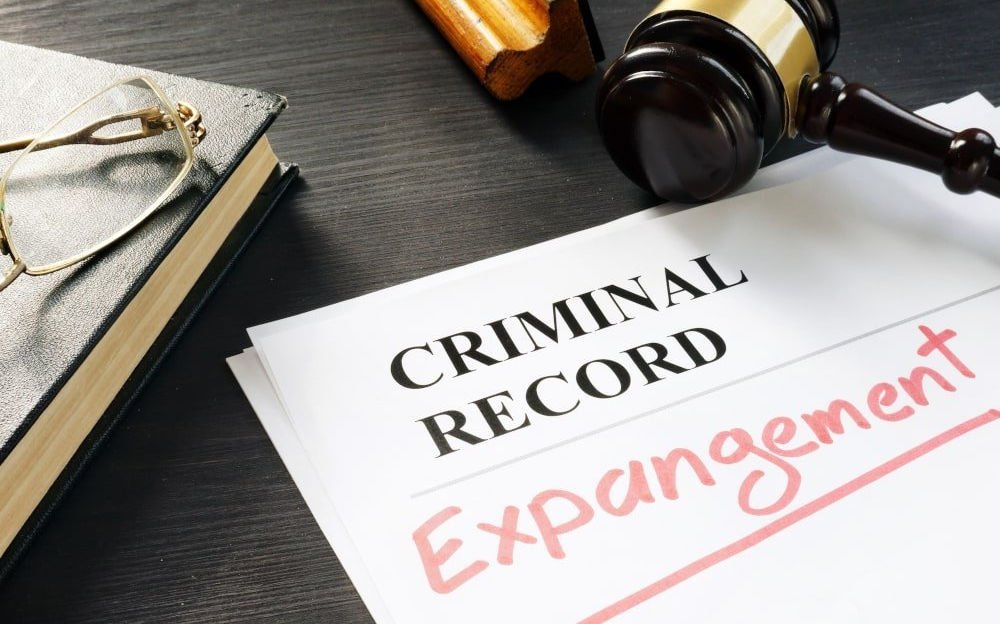
Expungement Under Canadian Law
Expungement is governed by the
Expungement of Historically Unjust Convictions Act
.
Unlike record suspension, expungement:
Permanently destroys the criminal record
Removes all references from government databases
Treats the conviction as though it never occurred
However, expungement is extremely limited and applies only to convictions that are now recognized as fundamentally unjust.
Convictions Eligible for Expungement
Eligible offences are primarily those that criminalize consensual sexual activity or reproductive autonomy, including:
Gross indecency
Buggery
Anal intercourse
Bawdy-house related offences
Procuring or facilitating abortion (pre-legalization)
These offences would not constitute crimes under modern Canadian law, which is the legal basis for expungement.
Cannabis Convictions and Expungement
Despite cannabis legalization, cannabis-related convictions are not eligible for expungement.
Instead:
Simple possession convictions qualify for a record suspension
No waiting period
No application fee
More serious cannabis offences remain subject to standard waiting periods.
Expungement vs Record Suspension: Legal Comparison
Feature
Record Suspension
Expungement
Record destroyed
No
Yes
Availability
Most offences
Very limited
Governing statute
Criminal Records Act
Expungement Act
Reversible
Yes
No
Why Avoiding a Criminal Record Is Always Preferable
Post-conviction remedies are limited, time-consuming, and uncertain. By contrast, early legal defence can prevent a criminal record from forming in the first place.
The Greater
Toronto Area criminal defence lawyers
at Mass Tsang have decades of experience defending serious and non-serious criminal charges. Their strategic approach has helped thousands of clients avoid permanent criminal records through early intervention, negotiation, and trial advocacy.
When criminal charges threaten your future, timing and strategy matter.
Contact Mass Tsang today for a confidential consultation.
Frequently Asked Questions About Expungement and Criminal Record Sealing in Canada
Can a criminal record be completely erased in Canada?
In most cases, no. Canadian law does not allow routine expungement of criminal records. Most individuals must rely on a record suspension, which seals the record but does not destroy it.
What is the difference between expungement and a record suspension?
A record suspension seals a criminal record and removes it from routine background checks, but the record still exists. Expungement permanently destroys the record and treats the conviction as if it never occurred, but it is available only for a very limited category of historically unjust convictions.
How long does a criminal record last in Canada if nothing is done?
If no discharge, record suspension, or expungement applies, a criminal record may remain in the national RCMP database until the individual reaches 80 years of age.
When can someone apply for a record suspension in Canada?
For summary offences, a person may apply after five years. For indictable offences, the waiting period is ten years. All sentences, fines, surcharges, and probation conditions must be fully completed before applying.
Does a record suspension remove a conviction completely?
No. A record suspension restricts access to the criminal record but does not delete it. The record may still be disclosed by court order or revoked if new offences are committed.
Are cannabis-related convictions eligible for expungement?
No. Cannabis convictions are not eligible for expungement. However, convictions for simple possession may qualify for a record suspension with no waiting period or application fee.