Short answer:
An Ontario DUI arrest typically follows this path:
traffic stop or RIDE check
→
roadside screening
(approved screening device, SFST, or oral-fluid drug test) →
arrest if reasonable grounds
→
transport to the station
→
evidentiary breath, DRE, or blood testing
→
release on a promise to appear or bail
. At every stage, Charter rights — especially
right to counsel (s. 10(b))
and
silence
— apply, and procedural errors can become defence issues.
Being arrested for driving under the influence (DUI) in Ontario is a stressful and overwhelming experience. Whether the stop happens during a routine traffic check, after a collision, or because an officer suspects impairment, the process can feel intimidating — especially if you don't know your rights or what police are legally permitted to do.
A DUI charge can have life-changing consequences: licence suspension, fines, criminal records, increased insurance premiums, travel restrictions, and even jail in severe cases. Because the stakes are high, it's essential to understand how the DUI arrest process works, what police must follow, and where legal defences often arise.
This article provides a clear, Ontario-specific breakdown of the entire DUI arrest process — from the initial traffic stop to post-arrest release or detention — and explains where procedural and Charter issues commonly arise. (In Canada, "DUI" is popular U.S. terminology; the Criminal Code uses
impaired operation
and related Part VIII.1 offences — see
the difference between DUI and DWI in Canada
.)
Key Takeaways
-
Police may stop any driver at any time for a sobriety check — suspicion of impairment is not required.
-
Roadside alcohol and drug screenings must comply with strict timing, accuracy, and constitutional requirements.
-
Your Charter rights, especially your right to counsel and your right to remain silent, apply from the moment you are detained.
-
Errors in police procedure often become powerful defence arguments in DUI cases.
-
A
DUI lawyer in Toronto
can challenge screening demands, testing timelines, detention length, and evidence collection.
-
Speaking to police without legal advice is one of the most common mistakes individuals make after a DUI stop.
Why Police Can Stop You at Any Time in Ontario
Since the
Criminal Code
amendments in 2018, police in Ontario have the authority to stop any driver to conduct a sobriety check — even without observing erratic driving or signs of impairment. This is known as
mandatory alcohol screening
under
s. 320.27(2)
.
While mandatory screening increases enforcement, it does not eliminate the requirement that police follow constitutional protections. Any DUI arrest must still comply with:
-
The Canadian Charter of Rights and Freedoms
-
Criminal Code standards for alcohol and drug testing (Part VIII.1)
-
Reasonable timelines for detention
-
Proper procedures for roadside and station testing
If officers fail to comply with these rules, the defence may be able to challenge the admissibility of evidence or the validity of the arrest.
Why Drivers Are Typically Stopped
While random stops are allowed, most DUI arrests begin for predictable reasons:
-
Roadside or moving RIDE checkpoints
-
Erratic driving behaviour (swerving, speeding, slow driving)
-
Traffic violations (broken lights, expired sticker, illegal turns)
-
Reports from other motorists
-
Collisions — especially injury or fatal crashes
In most cases, the officer begins by asking for your licence, insurance, and registration while observing your speech, coordination, and smell of alcohol or cannabis, as well as your behaviour.
You do not have to answer "Have you been drinking?" Anything you say can be used as evidence.
Roadside Screening: How Police Test for Alcohol and Drugs
After the initial interaction, the officer may legally demand one of the following:
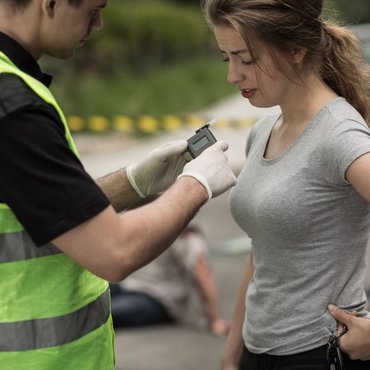
1. Roadside Breath Test (Approved Screening Device)
Police do not need suspicion of impairment to demand this test under mandatory alcohol screening. Refusing is a separate criminal offence — see
what refusal or failure to provide a sample means in Canadian DUI law
.
A result of:
-
50–80 mg
(the "warn range") → provincial 3-day suspension + $250 fine (HTA consequences)
-
Over 80 mg
→ arrest for
over 80
(Criminal Code) — the
over 80 rule in Ontario
is a separate charge from impaired operation
2. Standardized Field Sobriety Testing (SFST)
Used when a breath device is unavailable or when drug impairment is suspected. This includes assessing:
-
Eye movements
-
Walk-and-turn test
-
One-leg stand
Failing the SFST typically leads to arrest.
3. Oral Fluid Drug Screening
Used less frequently, but legal. Detects THC, cocaine, and methamphetamine.
What Happens When You're Arrested for DUI
Once an officer forms reasonable grounds to believe you are impaired or over 80, they must:
-
Inform you that you're under arrest
-
Explain the reason
-
Read your right to counsel
-
Allow you to contact a lawyer
-
Detain you only as long as reasonably necessary
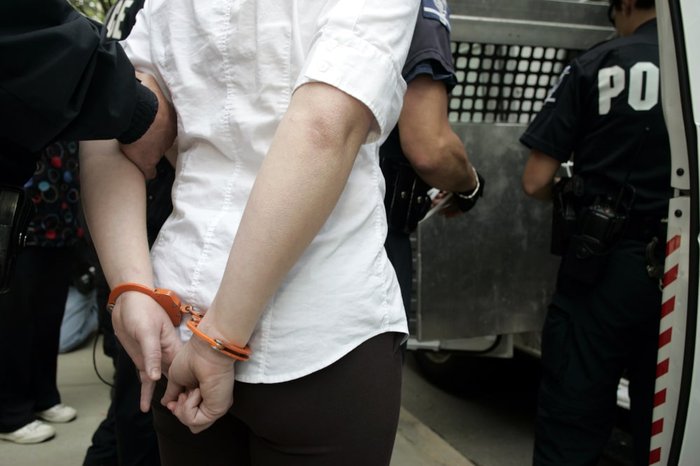
You may be handcuffed and placed in a cruiser. Your vehicle may be searched or towed.
You still have the right to remain silent — and should use it.
As
Brian Brody, Criminal Defence Lawyer Partner at Mass Tsang
, notes:
"After the arrest, the biggest mistake people make is talking too much. Anything you say becomes evidence. Invoke your right to silence until you speak with a lawyer."
Police Station Procedures: What Happens After You Arrive
At the station, you will undergo formal testing that determines which offence you will be charged with. Police may require:
Breathalyzer Test
-
Must occur
as soon as practicable
after arrest; the Crown must prove the result relates to the time you were operating the vehicle (the "two-hour" framework under s. 320.31)
-
Two tests must be taken at least 15 minutes apart
-
Operated by a qualified technician only
Drug Recognition Evaluation
For suspected drug impairment, a certified Drug Recognition Expert (DRE) conducts a multi-step assessment examining:
-
Vital signs
-
Eye reactions
-
Coordination
-
Toxicological evidence
Blood Testing
Blood samples are used in:
-
Collisions involving serious injury or death
-
Situations where breath testing is not possible
Charter Rights at This Stage
You must be given:
-
A private chance to speak with a lawyer
-
Advice on your right to counsel before testing
-
Notice of the consequences of refusing
If police fail any of these obligations, the defence may ask the court to exclude the results under
s. 24(2) of the Charter
.
Testing Protocols Police Must Follow — And Why They Matter
Strict timing and procedural requirements protect drivers from unreliable or unconstitutional testing. Police must ensure:
-
No unreasonable delays before roadside tests
-
Evidentiary breath testing as soon as practicable after arrest
-
Blood samples taken according to lawful demand and Charter standards
-
Devices are correctly calibrated and maintained
-
The testing officer is certified
-
Drivers are supervised to prevent mouth alcohol contamination
-
The right to counsel is respected without delay
Failure to comply allows defence lawyers to argue for the exclusion of breath or drug test results.
As
Robbie Tsang, Criminal Defence Lawyer & Managing Partner
, explains:
"In many DUI cases, the legal defence doesn't focus on the alcohol level but on whether police followed the law. One procedural error can be enough to win a case."
When Police Can Release You — And When They Can't
After processing, you may be released on:
-
A Promise to Appear
-
An Undertaking with conditions
-
Your own recognizance
Police typically release individuals when they have a safe way home and no aggravating factors. You may be held for a bail hearing if:
-
The DUI involved bodily harm
-
Additional charges apply
-
You have a criminal history
-
Police believe you pose a danger
What Happens After the Arrest: Charges You May Face
Based on results and observations, Criminal Code charges may include:
-
Impaired operation
(s. 320.14(1)(a)) — alcohol or drugs
-
Over 80
(s. 320.14(1)(b))
-
Refusal or failure to provide a sample
(s. 320.15)
-
Impaired care or control
(s. 320.14(1)(a) in a care-or-control context)
Provincial consequences (immediate roadside suspension, vehicle impoundment, fines, ignition interlock) often apply in parallel. Penalty ranges and long-term consequences are charge-specific and change with aggravating factors — what matters first is whether the stop, screening, arrest, and station testing were done lawfully.
Where Defence Lawyers Find Problems in DUI Cases
Experienced defence lawyers analyze every moment of the arrest to identify procedural errors or Charter violations. Common defence avenues include:
-
Invalid or unlawful traffic stop
-
Unreasonable delay before testing
-
Malfunctioning or improperly calibrated devices
-
Incorrect test administration
-
Failure to provide the right to counsel
-
Improper detention
-
Lack of reasonable grounds for arrest
-
Contamination from mouth alcohol
-
Charter violations under sections 8, 9, 10(a), 10(b)
A single breach may be enough to exclude test results and undermine the Crown's case.
Roadside vs. Station Testing
These are different legal events with different standards:
-
Roadside approved screening devices (ASD)
operate under mandatory alcohol screening and reasonable-suspicion demands. Results are generally
not
the same as evidentiary breath readings and are used to form grounds for arrest — not as the sole proof at trial.
-
Evidentiary breath tests
at the station require a qualified technician, proper procedure, and compliance with Charter rights. Defences often target whether the transition from roadside to station was lawful, timely, and properly explained.
Confusing the two stages — or treating a roadside "fail" as automatic proof of over 80 — is a common misunderstanding and a frequent source of successful challenges.
Your Rights During a DUI Arrest — And Why They Matter
During a DUI arrest in Canada, you have the following legal rights under the Charter of Rights and Freedoms:
-
The right to remain silent
— You are not required to answer police questions beyond identifying yourself.
-
The right to be informed of the reason for your detention or arrest
— Police must clearly state why you are being stopped or arrested.
-
The right to retain and instruct counsel without delay
— You must be allowed to contact a lawyer as soon as possible after being detained.
-
The right to be free from unreasonable search and seizure
— Police must follow lawful procedures when requesting breath, blood, or searching your vehicle.
-
The right to be tested within a reasonable time
— Unreasonable delay before evidentiary testing can support an exclusion application.
Why this matters: If any of these rights are violated, your lawyer may argue to exclude the resulting evidence, which can lead to reduced or withdrawn charges.
What to Do If You've Been Arrested for DUI
If you've been arrested for DUI in Ontario, taking the proper steps immediately can protect your rights and improve your legal defence. Here's what to do:
-
Do not argue with the police
— Stay calm and cooperative. Arguing or resisting may escalate the situation or be used against you in court.
-
Do not answer incriminating questions
— You are not obligated to explain where you were or how much you drank. Avoid volunteering any information.
-
Ask to speak with a lawyer immediately
— Clearly and firmly state: "I want to speak with a lawyer." This right cannot be delayed.
-
Make no statements until you receive legal advice
— Wait until you've consulted a lawyer before saying anything that may be recorded or written down.
-
Record your recollection of events afterward
— As soon as possible, write down everything you remember: the time of the stop, officer behaviour, what was said, and whether you were informed of your rights.
Why it matters: These actions preserve key evidence and can help your defence lawyer challenge the legality of the stop, arrest, or testing procedures.
How Mass Tsang LLP Builds a Winning DUI Defence
Mass Tsang LLP focuses on the arrest timeline itself — roadside demands, station testing, and Charter compliance — rather than generic penalty lists. That includes:
-
Detailed analysis of roadside and station procedures
-
Identifying Charter violations
-
Challenging breathalyzer and DRE evidence
-
Cross-examining officers for inconsistencies
-
Using case law on timing, detention, and reasonable grounds
Protect Your Future — Get Experienced DUI Defence Now
A DUI charge is serious, but a conviction is not inevitable. Many cases turn on whether police followed the law at the stop, arrest, or testing stage. Early advice helps preserve your options.